 Skip to content



Marine Wet Lay-up & Laminating Epoxy Resin | EP1010
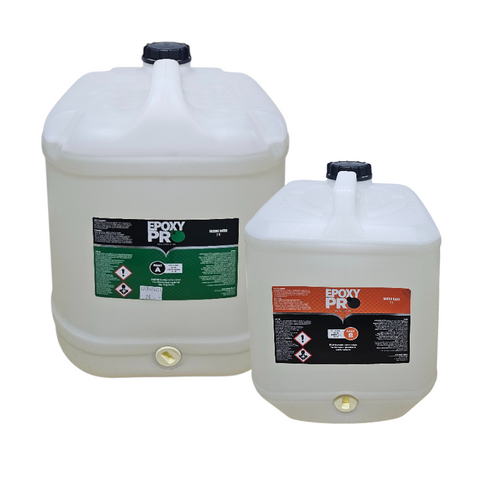
EpoxyPro kits supply the resin and hardener only. Measuring cups and stirrers are sold separately. [Click here for mixing accessories]
EpoxyPro EP1010 Marine Wet Lay-Up & Laminating Epoxy 2:1
EP1010 is a low-viscosity epoxy laminating system formulated for fibreglass wet lay-up, composite laminating and marine repair applications.
The low mixed viscosity provides rapid wetting and penetration of fibreglass reinforcement, allowing the resin to distribute efficiently through woven cloth, tapes and other reinforcement fabrics. This assists with complete fibre saturation while reducing excessive resin build-up within the laminate.
EP1010 is suitable for hand lay-up using brush, roller or squeegee application and can be used for both new composite construction and repair of existing fibreglass structures.
Key Applications
Fibreglass wet lay-up
Marine composite laminating
Boat building and repair
Hull and deck laminating
Internal hull reinforcement
Fibreglass cloth and tape wet-out
Timber and fibreglass laminating
Composite panel fabrication
Structural fibreglass repairs
Sealing and coating timber and fibreglass
Technical Characteristics
Low Mixed Viscosity
Approximately 807 cP at 25°C, providing good flow through reinforcement and efficient fibre wet-out.
2:1 Mixing Ratio
Simple 2 parts resin to 1 part hardener by volume mixing ratio.
High Fibre Wet-Out
Designed to penetrate woven fibreglass reinforcement and minimise dry areas within the laminate.
Controlled Resin Distribution
Low viscosity allows the resin to spread through reinforcement with reduced working compared with higher-viscosity epoxy systems.
Clear Resin System
Produces a clear laminate suitable for applications where reinforcement or substrate visibility is required.
Adhesion
Suitable for bonding to fibreglass, timber and compatible composite substrates when surfaces are correctly prepared.
Laminating Performance
Suitable for multiple-layer wet lay-up construction, fibreglass reinforcement and repair laminates.
Wet Lay-Up Application
EP1010 is designed primarily for hand wet lay-up processes.
After mixing the resin and hardener at the specified 2:1 ratio, the epoxy can be applied to the prepared substrate before positioning the fibreglass reinforcement. Additional resin is then worked through the reinforcement using a brush, laminating roller or squeegee until the fibres are fully wetted.
Additional reinforcement layers can be applied as required to build the specified laminate thickness.
For best laminate quality, sufficient resin should be used to completely wet the reinforcement without leaving excessive pools of resin between layers.
Use with FS-200 Fumed Silica
EP1010 can be combined with FS-200 fumed silica when a higher-viscosity or thixotropic epoxy compound is required.
FS-200 can be progressively added to the mixed EP1010 system to modify flow and sag resistance. Depending on the amount added, the mixture can be adjusted from a slightly thickened resin through to a non-sag paste.
This makes the EP1010 system suitable for additional applications including:
Bonding and filleting
Gap filling
Vertical and overhead repairs
Filling small voids and imperfections
Creating radiused fillets prior to fibreglass laminating
Increasing resin hold on vertical surfaces
The EP1010 resin and hardener should always be accurately measured and thoroughly mixed at the specified 2:1 ratio before incorporating FS-200.
Technical Overview
Mix Ratio: 2:1 Resin to Hardener by volume
Mixed Viscosity: Approx. 807 cP @ 25°C
Appearance: Clear
Primary Process: Hand wet lay-up
Application Methods: Brush, roller or squeegee
Reinforcement: Fibreglass cloth, woven fabric and tape
Viscosity Modifier: Compatible with FS-200 fumed silica
Suitable Substrates: Fibreglass, timber and compatible composite materials
Applications: Laminating, wet-out, composite repair, bonding, filleting, sealing and coating

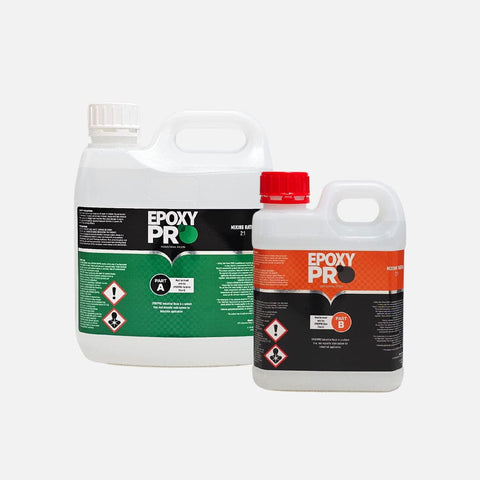
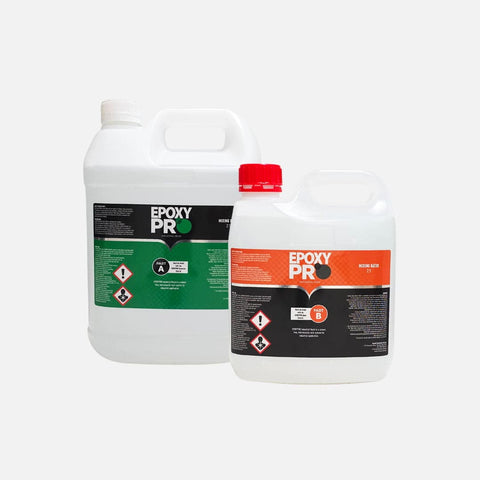
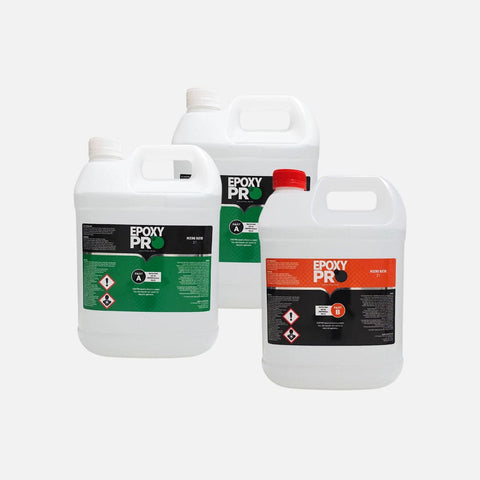
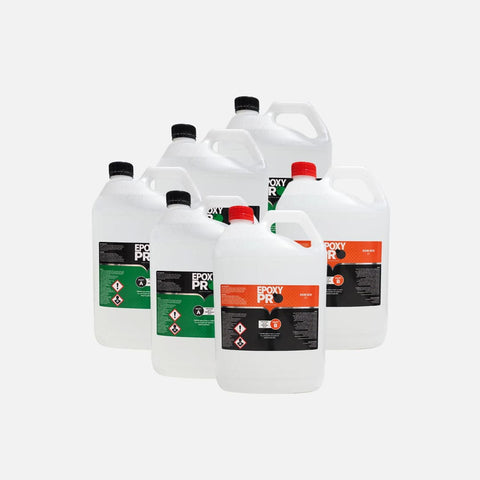
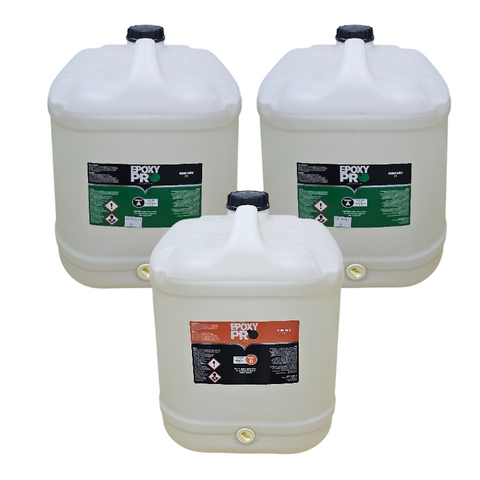
Packaging Notice: To minimise dispatch delays and to keep our prices as low as possible during current global supply chain shortages, your exact order volume may be fulfilled using a combination of different sized bottles (e.g., a 4L kit may be supplied as 1x 2L and 2x 1L bottles). Rest assured, the total volume and required mixing ratios will always be 100% accurate.
- Epoxy Resin
- Epoxy Hardener
- To keep prices as low as possible for our high-volume trade customers, EpoxyPro kits supply the resin and hardener only. Measuring cups and stirrers are sold separately. [Click here for mixing accessories]
Marine and Automotive Repairs: Suitable for repairing boats, yachts, bicycles, and motorbikes, ensuring durable and reliable fixes.
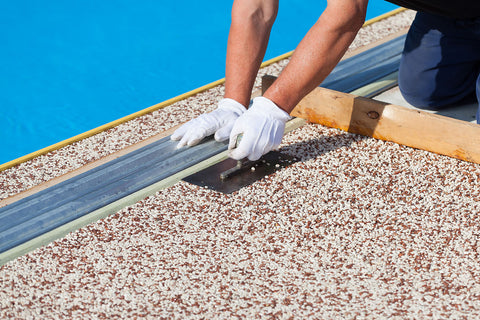
Paving and Flooring: Excellent for pebble and stone paving, as well as flooring applications for patios, decks, and driveways. It provides a strong and durable finish that can withstand heavy use.
Plumbing Systems: Ideal for use in sewer, stormwater, trade waste systems, vertical drain stacks, vented systems, and sanitary systems. It ensures reliable sealing and bonding in various plumbing applications.
Electronics: Perfect for infusion, laminating, and coating electronics, providing a protective and durable layer.
Cabinet Making and Carpentry: Ideal for use in cabinetry and carpentry projects, offering strong adhesive properties and a durable finish.

Epoxy Pro Trade Grade
Epoxy Pro Resin Kit is your go-to choice for large projects where volume, strength, and cost-effectiveness are essential. Whether you’re looking for a Epoxy pebble system, working on marine repairs, paving, plumbing, electronics, or carpentry, Epoxy Pro delivers reliable performance and exceptional results.

Intermediate Experience Required
The Epoxy Pro Resin Kit is designed with the intermediate user in mind, requiring experience to fully utilise. Its versatile applications and robust performance are ideal for large projects, but precise measuring, mixing, preparation and other impacting factors necessitate a foundational understanding of epoxy resin.
Key Benefits:
Formulated for a wide range of applications, Epoxy Pro is ideal for adhesive bonding, coatings, sealants, and as a binder in composite materials. Its adaptability makes it suitable for various industrial uses.
Engineered for heavy-duty applications, this epoxy resin offers outstanding mechanical strength and long-lasting durability. It is perfect for demanding environments such as flooring, construction, and marine coatings.
Epoxy Pro is a budget-friendly option for large projects. Its affordability makes it a practical choice for extensive applications, providing excellent value without compromising on performance or durability.
